
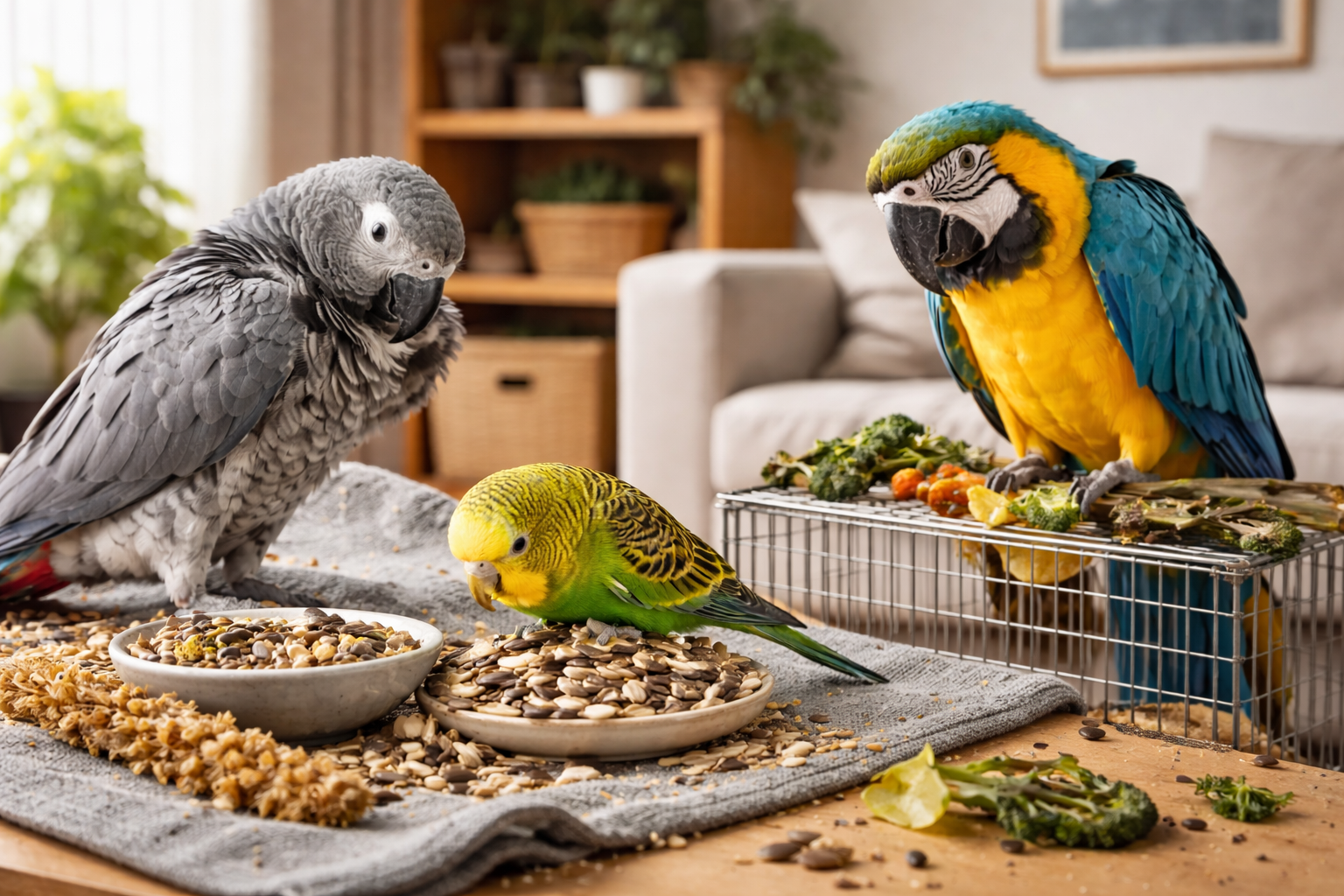
Common Mistakes Parrot Owners Make — And How They Impact Health and Well-Being
Parrots are intelligent, social, and long-lived birds that require far more than a cage and a bowl of seeds. Yet many well-meaning owners unintentionally create environments that compromise their parrot’s physical and psychological health. Unlike dogs or cats, parrots have complex dietary needs, heightened sensitivity to stress, and a strong dependence on environmental enrichment. When these needs are misunderstood or ignored, the consequences can be serious.
Understanding the most common mistakes is the first step toward building a healthier and more fulfilling life for these remarkable companions.
Mistake #1: An Unbalanced or Seed-Based Diet
One of the most frequent errors in parrot care is relying heavily — or exclusively — on seed mixes. While seeds are appealing and convenient, they are often high in fat and deficient in essential nutrients such as vitamin A, calcium, and certain amino acids.
Health Consequences of Poor Nutrition
A long-term seed-based diet can lead to:
- Obesity
- Fatty liver disease
- Vitamin deficiencies
- Weak immune response
- Feather quality deterioration
Parrots require a varied diet that includes formulated pellets, fresh vegetables, limited fruits, and occasional healthy grains or legumes. Leafy greens, carrots, bell peppers, and broccoli provide essential nutrients. Clean, fresh water must always be available.
Gradual dietary transitions are important, as parrots can be resistant to change. Sudden food replacement may cause stress or refusal to eat.
Mistake #2: Inadequate Space and Cage Size
Parrots are active, athletic birds. Many species naturally fly long distances daily in the wild. A cage that is too small restricts movement and leads to both physical and psychological problems.
Effects of Limited Space
When confined to cramped environments, parrots may develop:
- Muscle weakness
- Obesity
- Feather plucking
- Aggression or lethargy
The cage should allow full wing extension without obstruction and provide room for climbing and enrichment items. Bar spacing must be appropriate for the species to prevent injury.
Equally important is daily out-of-cage time in a safe environment. Flight or supervised exploration supports physical conditioning and mental stimulation.
Mistake #3: Lack of Mental Stimulation
Parrots are highly intelligent. In the wild, they spend hours foraging, solving problems, and interacting socially. A bored parrot is often an unhealthy parrot.
Behavioral Consequences of Boredom
Insufficient enrichment can result in:
- Excessive screaming
- Self-mutilation or feather destruction
- Depression-like symptoms
- Stereotypic repetitive behaviors
Providing toys is not enough; rotation and variety are essential. Foraging toys that require problem-solving mimic natural feeding behaviors. Safe branches, shreddable materials, and interactive play sessions encourage cognitive engagement.
Human interaction is also critical. Many parrots form strong social bonds and require consistent attention and communication.
Mistake #4: Chronic Stress
Parrots are sensitive to environmental changes. Noise, inconsistent routines, lack of sleep, or frequent relocation of the cage can elevate stress levels.
Sources of Stress
Common stress triggers include:
- Exposure to loud televisions or music
- Placement in high-traffic areas
- Insufficient darkness at night
- Sudden schedule disruptions
- Lack of predictable routines
Chronic stress weakens the immune system and increases susceptibility to illness. It may also intensify behavioral issues.
Providing a consistent sleep schedule — ideally 10 to 12 hours of uninterrupted darkness — supports hormonal balance and overall well-being.
Mistake #5: Ignoring Air Quality and Environmental Hazards
Parrots have highly sensitive respiratory systems. Fumes from non-stick cookware, aerosol sprays, scented candles, and cleaning chemicals can be toxic.
Exposure to household toxins may cause:
- Respiratory distress
- Neurological symptoms
- Sudden fatal reactions in severe cases
Maintaining clean air, avoiding harmful fumes, and ensuring proper ventilation are vital aspects of parrot care.
Mistake #6: Delayed Veterinary Care
Birds instinctively hide signs of illness. By the time symptoms become obvious, conditions may already be advanced.
Routine checkups with an avian veterinarian allow early detection of nutritional deficiencies, infections, and organ problems. Preventative care significantly increases life expectancy and quality of life.
The Long-Term Impact of Poor Care
Parrots can live decades. Chronic nutritional imbalance, stress, and confinement accumulate over time, leading to:
- Shortened lifespan
- Chronic liver or metabolic disorders
- Irreversible behavioral damage
- Compromised immune function
Conversely, proper care supports vibrant plumage, strong immune defenses, stable temperament, and extended longevity.
Building a Healthier Environment
Responsible parrot ownership requires:
- A nutritionally balanced diet
- Adequate space and daily activity
- Mental enrichment and social interaction
- Stable routines and sufficient sleep
- Clean air and safe surroundings
- Preventative veterinary care
Small improvements in daily care can dramatically influence long-term outcomes.
Parrots are not decorative pets; they are complex, intelligent companions with emotional depth and physiological needs that demand thoughtful attention. Avoiding common mistakes protects not only their physical health but also their psychological stability.
With informed care and commitment, parrots can thrive, displaying curiosity, vitality, and the social engagement that make them such extraordinary members of the household.