
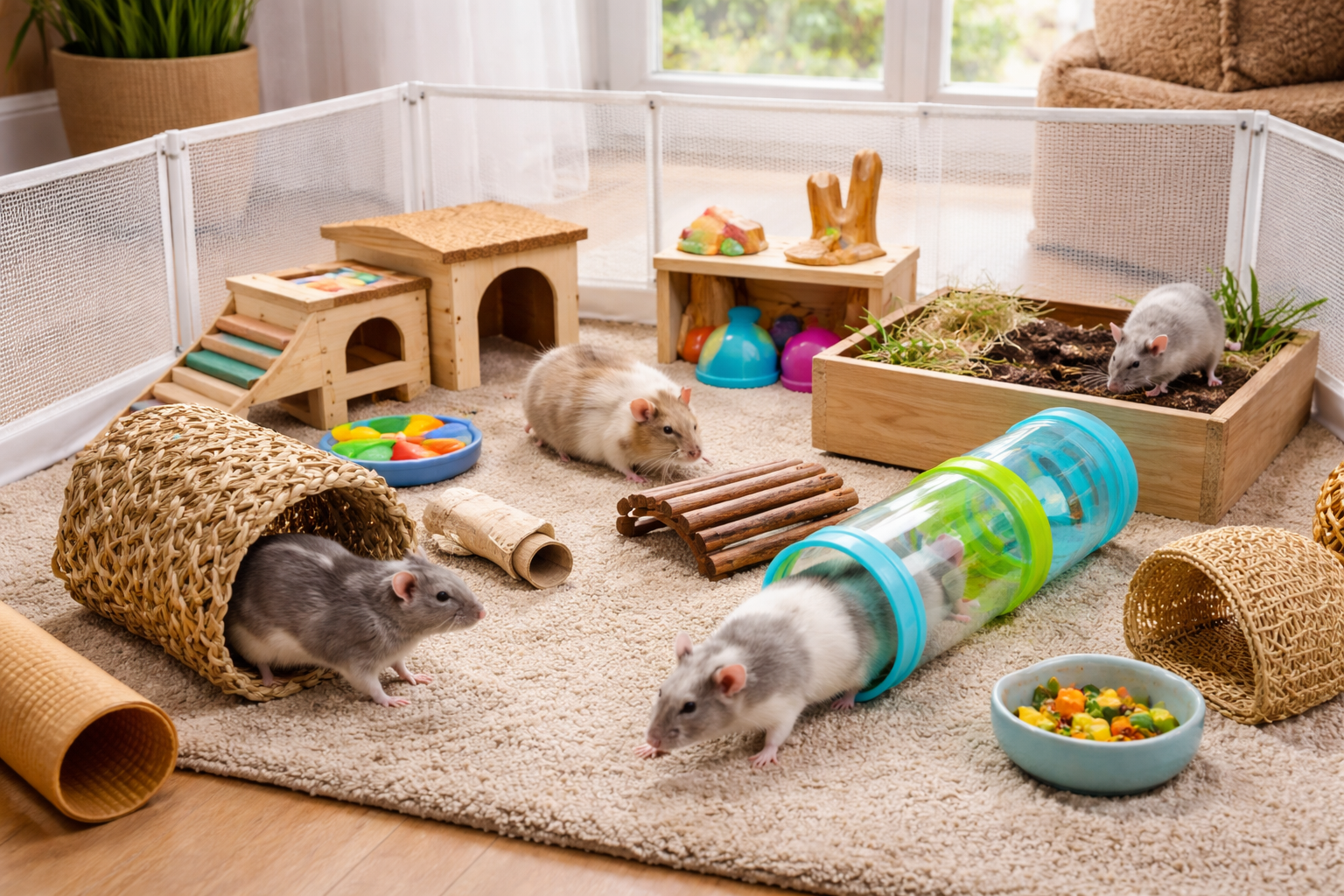
Creating a Safe “Free Roam” Zone for Rats and Hamsters: How to Design a Secure Play Area Outside the Cage
Small pets such as rats and hamsters are naturally curious, active, and intelligent creatures that require more than just a well-equipped cage to thrive. While cages provide safety and structure, they often limit the animal’s ability to explore, exercise, and engage with their environment. This is where the concept of a “free roam” zone becomes essential. A properly designed play area outside the cage allows these animals to express natural behaviors while maintaining safety and control.
Creating such a space requires careful planning and attention to detail. Unlike larger pets, small rodents are highly vulnerable to environmental hazards, making it crucial to eliminate risks while still providing stimulation and freedom.
Understanding the Needs of Small Rodents
Rats and hamsters differ in behavior, but they share common needs when it comes to exploration. Rats are highly social, intelligent, and benefit from interactive environments that challenge their problem-solving skills. Hamsters, on the other hand, are more solitary but equally active, often driven by instinct to burrow, climb, and investigate.
A free roam zone must accommodate these instincts. The goal is not simply to give the animal more space, but to create a controlled environment where movement, curiosity, and play can occur without danger.
Choosing the Right Location
The first step in setting up a safe play area is selecting an appropriate location. A small, enclosed room or a sectioned-off part of a room works best. Spaces with minimal furniture and limited hiding spots are ideal, as they make supervision easier and reduce the risk of the animal getting lost or stuck.
Flooring is also an important consideration. Smooth surfaces are easier to clean, but they can be slippery. Adding soft mats or rugs provides better traction and comfort, while also protecting the animal from cold surfaces.
Eliminating Potential Hazards
Safety is the most critical aspect of any free roam setup. Small rodents can squeeze through incredibly narrow gaps, chew on almost anything, and climb unexpected surfaces. Every inch of the designated area should be inspected from the animal’s perspective.
Electrical wires must be completely inaccessible, as chewing on them can lead to serious injury. Toxic plants, sharp objects, and small items that could be swallowed should be removed. Furniture gaps and holes in walls or cabinets must be blocked off securely.
Temperature and airflow should also be considered. The space should be free from drafts and not exposed to extreme heat or direct sunlight for extended periods.
Creating an Enriching Environment
Once safety is ensured, the next step is to make the area engaging. A free roam zone should stimulate both physical activity and mental engagement. Tunnels, cardboard structures, and climbing platforms can mimic natural environments and encourage exploration.
For rats, interactive elements such as simple obstacle courses or hidden treats can provide mental stimulation. Hamsters benefit from digging boxes filled with safe materials, allowing them to satisfy their burrowing instincts.
Rotating toys and rearranging the setup periodically helps maintain interest and prevents boredom. Even small changes can make the environment feel new and exciting.
Supervision and Routine
Despite careful preparation, supervision remains essential during free roam time. Small rodents can quickly find unexpected ways to get into trouble, so it is important to monitor their activity at all times.
Establishing a routine also helps the animal feel secure. Regular free roam sessions at the same time each day create predictability, reducing stress and encouraging confident exploration. Over time, pets become more comfortable and engaged in their environment.
Hygiene and Maintenance
Keeping the play area clean is vital for the health of the animal. Accumulated waste, food remnants, and debris should be removed after each session. Using easily washable materials simplifies maintenance and ensures a hygienic environment.
Additionally, regularly inspecting the area for new hazards or damage is important. Chewing and wear can gradually create risks that were not initially present, so ongoing vigilance is necessary.
Strengthening the Human-Animal Bond
Free roam time is not only beneficial for physical and mental health but also for building trust between the pet and its owner. Interacting with the animal in a safe, open space encourages positive experiences and strengthens the relationship.
Gentle interaction, offering treats, and allowing the pet to approach voluntarily all contribute to a sense of security. This trust makes handling easier and improves overall well-being.
Conclusion
Designing a safe “free roam” zone for rats and hamsters is a rewarding process that significantly enhances their quality of life. By carefully balancing safety, enrichment, and supervision, it is possible to create an environment where these small animals can explore freely without unnecessary risks. With thoughtful planning and consistent care, free roam time becomes an essential part of a healthy, stimulating lifestyle for small pets.